- 0370670385
- Mon-Fri: 9:30am - 5:30pm, Sat - 9:00am - 2:00pm, Sun - Closed

Invisalign
- Home
- Invisalign

Clinical Assessments for Clear Aligner Orthodontic Care

Invisalign is a commercial brand of clear aligner orthodontic treatment designed to gradually alter tooth position using a series of removable plastic trays.
While clear aligners can be used to manage certain clinical presentations of crowding, spacing, and minor bite discrepancies, they are not universally suitable for all orthodontic conditions. Depending on your specific oral anatomy, alternative options, such as traditional fixed braces, other clear aligner systems, or a referral to a specialist orthodontist, may be recommended to support your oral health goals.
At Advantage Family Dental Clinic, we can determine your treatment suitability by an assessment of your teeth, gums, bite, and overall dental history.
Who is Invisalign Best Suited For?
An Invisalign consultation might suit people concerned about crowded teeth, small spaces, selected rotated teeth, or tooth movement after previous orthodontic treatment.
Appearance forms only one part of the assessment. This means your dentist also considers gum health, tooth roots, existing crowns or fillings, missing teeth, bite relationships, and the amount of movement required. Consistent daily wear also matters when deciding whether removable aligners fit your routine.
What Does the Consultation Involve?

What Does the Consultation Involve?
Initial Assessment
The dentist examines your mouth, discusses your goals, and reviews your dental history. Photographs, digital scans, and X-rays might form part of treatment planning.
Digital Planning
A digital treatment plan maps proposed tooth movement across each stage. Computer simulations support discussion and planning. They do not promise an exact final appearance.
Clear Aligners
A sequence of custom trays follows the approved plan. Each aligner applies planned pressure to selected teeth before you move to the next tray on your prescribed schedule.
Attachments and Other Aids
Small tooth-coloured attachments sometimes help guide selected movements. Elastics or minor enamel reshaping might also form part of individual plans.
• Review Appointments
Regular appointments allow your dentist to review tray fit, oral hygiene, gum health, and tooth movement.
If selected teeth do not follow the planned movement closely enough, another scan and additional aligners might be discussed.
Retainers
Teeth continue to move throughout life. Retainers help maintain tooth positions after the active aligner stage. Your dentist explains which retainer and wear schedule suits your plan.
What to Expect When Wearing Aligners
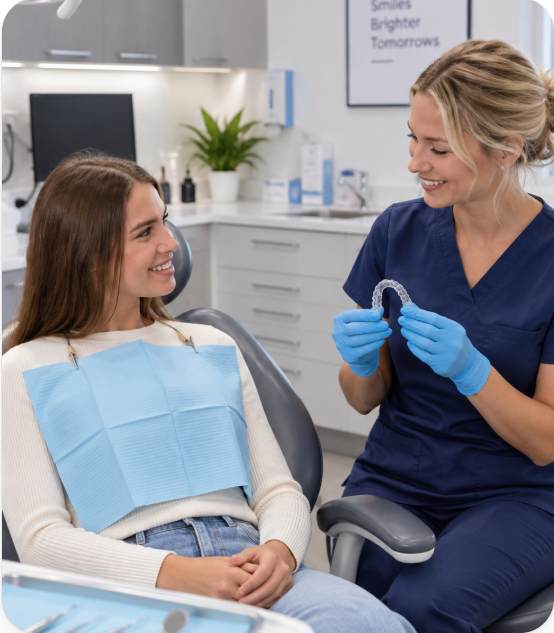
Clear aligners need consistent daily wear. Most treatment plans involve wearing trays for around 20 to 22 hours each day. Remove them for meals, drinks other than plain water, brushing, and cleaning between teeth unless your dentist gives different instructions.
A new tray often produces temporary pressure or tenderness. Some people also notice short-term speech changes, increased saliva, or irritation around an aligner edge or attachment.
Ensure that you clean your trays regularly and store them in their case when removed. Avoid hot water because heat might change their shape. Your teeth also need thorough cleaning before trays return after meals. Food and sugary or acidic drinks trapped beneath aligners increase the risk of decay and gum irritation.
Why Consistency and Monitoring Matters
Reduced wear time often affects tray fit and treatment progress. Contact the clinic if an aligner breaks, goes missing, stops fitting correctly, or causes persistent discomfort. Treatment length differs between people. Movement complexity, bite, daily wear, biological response, missed appointments, and extra aligners influence the timeframe.
Orthodontic treatment has recognised risks including temporary tenderness, gum irritation, tooth decay where hygiene is poor, root changes, incomplete movement, bite changes, and tooth movement after active treatment.
Consult with a dentist at Advantage Family Dental Clinic to learn whether clear aligners are right for your orthodontic needs.
Surgical Notice
Any surgical or invasive procedure carries risks. Where another procedure forms part of your orthodontic plan, your dentist will explain relevant risks, alternatives, and recovery considerations before consent. Individual outcomes vary.
FAQs
Frequently Asked Questions
Can’t find what you’re looking for? Our team is happy to help — just give us a call.
Many treatment plans involve around 20 to 22 hours of daily wear. Follow the schedule provided for your case.
Yes. Aligners are generally removed for food and drinks other than plain water.
Timing depends on the movement required, bite complexity, wear consistency, and individual response.
Retention normally forms part of orthodontic care because teeth tend to shift after active treatment.
No. Suitability depends on your oral health, bite, tooth position, treatment goals, and required movements.